
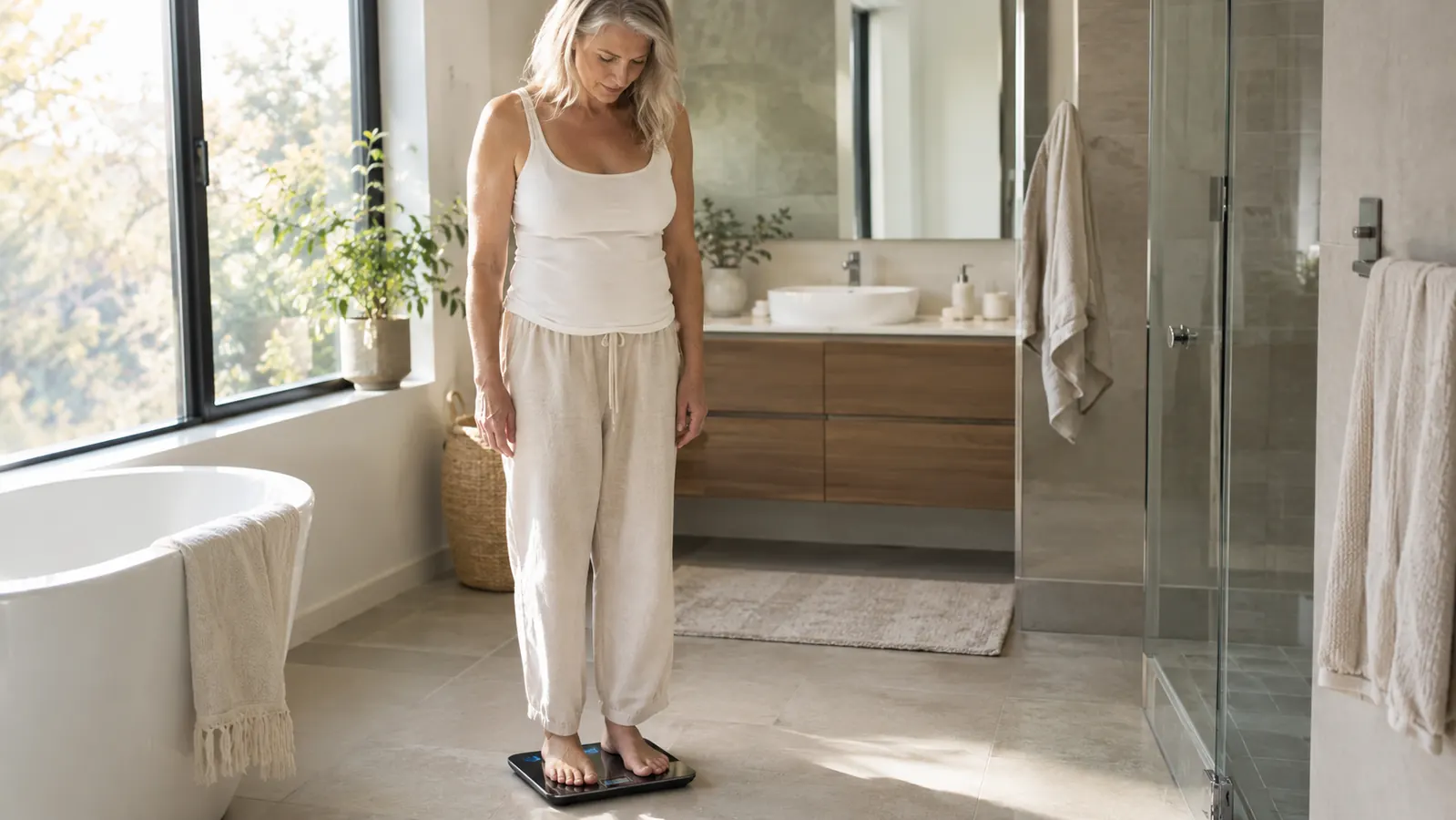
The hardest part of weighing myself was never the weighing. It was the morning after, when the number had gone up for no reason I could name. I would eat the same things, walk the same walks with Biscuit, and the scale would still act like I had fallen off the wagon. So I did what a lot of people do. I stopped weighing myself at all. That worked about as well as you would expect. Without the scale, I had no idea whether the slow changes I was making were adding up to anything. When my doctor said my numbers were creeping up at 56, I knew I needed a way to see the trend without letting one bad morning ruin my week. The RENPHO smart scale turned out to be the tool that let me do that.
Here is what I want you to take from this. The scale is not the boss of you. It is a measuring tool, like a tape measure or a thermometer. Used the right way, it shows you which direction you are heading. Used the wrong way, it can make you want to throw it in the trash. This guide is the routine I landed on after two years of figuring out what works for me. It is built around one idea: weigh less often, on purpose, and let the trend do the talking. If you follow the steps, you will spend about two minutes a week on the whole thing.
The scale that does the remembering for you
The RENPHO smart scale pairs with the RENPHO Health app over Bluetooth, so every Saturday morning weigh-in saves itself. No notebook, no spreadsheet, no trying to recall what last month looked like. You step on, get your weight, BMI, and body fat on the backlit LED display, and the app keeps the history. It is the closest thing to a set-it-and-forget-it habit I have found, and it is the reason I still weigh in every single Saturday.
Amazon Check Today's Price on Amazon →Step 1: Pick one weigh-in day and stick to it
I weigh in on Saturday morning, first thing, before coffee, after the bathroom, in the same spot on the bathroom floor. I picked Saturday because it is the end of my real week, the week of packed lunches and dog walks and home strength sessions. It is also the morning after Friday night, which is the night Rick and I are most likely to snack, so the number I get is an honest look at how my week actually went. Friday is when we relax, and Saturday is when I find out what relaxing cost. That sounds harsh, but it is exactly the information I need.
The specific day matters less than the consistency. Weighing on the same day, at the same time, under the same conditions, gives you a number you can compare to last week. Weighing whenever you remember, in different clothes, at different times of day, gives you a mess. I learned this the hard way when I tried weighing every morning and spent the week chasing my own tail. Every single day the number moved for reasons that had nothing to do with what I ate or how much I walked. It was exhausting, and it made me want to quit.
If Saturday does not work for you, pick Thursday. Pick Tuesday. The point is to pick one and treat it like the Sunday lunch prep I do, a standing appointment that does not require a decision. The less you have to think about it, the more likely you are to still be doing it in six months. I put my weigh-in on the same mental shelf as my food log and my lunch prep. It is just part of the week, like taking out the recycling, and that is exactly why it stuck.
Step 2: Set up the scale and the app once, then forget the setup
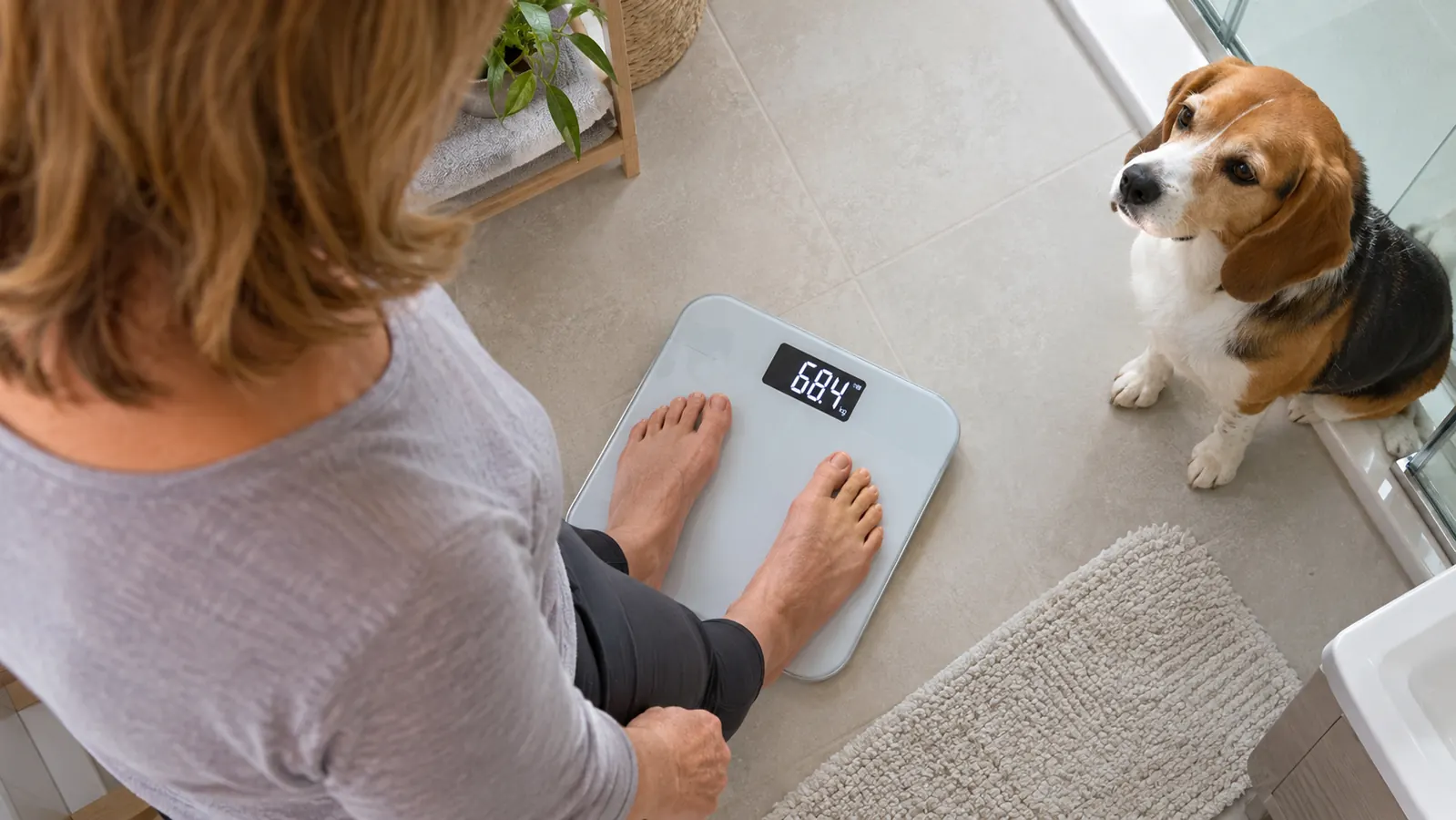
The RENPHO scale comes with everything you need in the box: the scale, a user manual, and two AAA batteries. You put the batteries in, set the scale on a hard, flat surface, and it is ready. I keep mine in the same corner of the bathroom, on the tile, because carpet throws off the reading and I do not want to think about that on a Saturday morning. The whole setup took me about ten minutes, and most of that was reading the manual to make sure I was not doing something wrong.
Then you download the RENPHO Health app and connect the scale over Bluetooth. The app is where the history lives. The display on the scale shows you the basics, weight, BMI, and body fat, right there on the backlit LED screen, and the app tracks the rest of the 13 metrics, including bone mass, so you can see more than just the number on the glass. I am not someone who loves technology, so if I could figure out the pairing in one evening, you can too. It genuinely is a one-time thing.
Set it up once and you are done. From then on, every time you step on the scale, the reading goes to the app on its own. You do not have to open the app, press a button, or write anything down. For someone like me who is not naturally organized, that is the whole difference between a habit that lasts and a habit that dies by February. The scale also shuts itself off after you step away, so I never have to worry about leaving it on and draining the batteries.
Step 3: Take the reading the same way every single time
Same day, same time, same spot, same everything. I step on barefoot, feet dry, standing still, facing the display. The scale reads to within 3.2 ounces, which is precise enough to catch real changes and honest enough to show everyday noise. That is exactly why the routine matters: if the conditions are the same, then the differences you see are mostly real. If I weighed myself after a big glass of water one week and before it the next, I would be comparing two different things and drawing a conclusion from the difference.
Give the scale a second to settle. The LED display lights up, shows the weight, then BMI and body fat, and then it is done. I do not weigh myself twice to see if the number changes. If I catch myself stepping back on for a second opinion, that is my signal to walk away, because the second reading will not tell me anything the first one did not. I have learned that the urge to re-weigh is rarely about accuracy. It is about hoping for a different answer, and that is the exact mindset this whole routine is designed to avoid.
One more thing I learned: the scale needs the same floor every time. I use the tile in the bathroom, never the rug in the hallway, never the mat. It sounds fussy, but it removes one more variable, and the fewer variables you have on a Saturday morning, the easier it is to trust what the trend says later. I also make sure my feet are dry before I step on, so I do not slide on the glass. Small details, but they are the difference between a reading I trust and a reading I argue with.

Step 4: Watch the trend, not the single number
Here is the part nobody tells you. Your weight will bounce around from week to week even when you are doing everything right. Salt, water, the time of month, a late dinner, a weekend with the grandkids, all of it shows up on the scale. Rick snacks in the evening, and on the nights I join him, the next morning's number is higher. That is not a moral failure. It is water and sodium, and it will pass. The number on any single Saturday is the least interesting piece of information the scale gives you.
What matters is the direction of the line over a month, not the dot on any single Saturday. The app builds your history for you, so you do not have to remember what you weighed three weeks ago. You just open it and look. Is the line heading down, holding flat, or creeping up? That is the only question worth answering. When I stopped asking what I weighed and started asking which direction I was heading, the whole process got calmer. I stopped bracing myself before I stepped on, because one reading was no longer the whole story.
I made a rule for myself. No reacting to a single Saturday. If the trend is flat for a month, I change one small thing and give it another month. If it is moving the right way, I keep doing exactly what I am doing. The scale is not grading my week. It is just taking a measurement, the same way I would measure flour for a recipe. And like a recipe, one lumpy batch does not mean the recipe is broken. It means I added the flour before the eggs, and next time I will do it in the right order.
Step 5: Let the trend point to one small change at a time
When the trend stalls, do not overhaul your whole life. Look for the one thing that drifted. I keep a simple food log on my phone, and when the line goes flat, I can look back and spot it. Usually it is something small, like the extra handful of pretzels with Rick at night, or the second helping of pasta on Tuesday. I cut that one thing, not everything. The food log is the reason I can find it, and the scale is the reason I know to look. Together they turn a vague feeling of being stuck into a specific, fixable detail.
The changes that worked for me are almost boring. Walking Biscuit twice a day in every kind of Ohio weather. More protein and fiber at meals. Short home strength sessions a couple of times a week. None of it is dramatic, and that is exactly why it worked. It was slow enough to keep doing, and the trend line slowly turned in the right direction. I did not change everything at once, because every time I tried that in my forties, I quit by the third week. Small changes, one at a time, are changes I can actually keep.
And if the trend goes the wrong way for a while, or you are making changes and nothing moves, check with your doctor. That checkup at 56 is what got me started. The scale is a tool, not a diagnosis. It tells you which direction you are heading, and it leaves the why to you and your doctor. There is no number on this scale that is worth feeling ashamed of, and there is no reading that should replace the advice of someone who actually knows what they are looking at.
What Else Helps
The scale is the measuring stick, but the habit is the whole game. Three things made the biggest difference for me. Sunday lunch prep, so I am not making hungry decisions on a Tuesday. The food log on my phone, which takes thirty seconds and tells me where the trend went sideways. And Biscuit, who needs his walk twice a day no matter what the scale said that morning. The scale told me which direction I was heading. The other three habits are the reason the direction changed at all.
I also stopped weighing myself on days that were not Saturday. No peeking midweek, no stepping on after a big meal out of curiosity. The scale only gets used for its one job, and the app only gets opened on Saturday. That boundary is what keeps the whole thing from turning into an obsession. Once I gave myself permission to not know my weight on a Tuesday, a lot of the anxiety went with it. The information would still be there on Saturday, and it would be better information because it was taken the same way as every other week.
One more thing. Pay attention to how your clothes fit and how you feel on the stairs, because the scale cannot tell you everything. There were months when the number barely moved and my jeans clearly fit better. The trend on the scale and the trend in your life should point the same way, and when they do, you are on the right path. I think of the scale as one source of information, not the only source. The food log, the clothes, the energy on a walk with Biscuit, they all count, and they all get a vote.
One bad Saturday is a data point, not a verdict. The only number worth reacting to is the trend.
Ready to see the trend instead of the daily noise?
The RENPHO smart scale gives you the routine I use: step on, let the app remember, and check the direction once a month. Tempered glass, a backlit LED display, and up to 180 kg of capacity, with the batteries in the box. No notebook, no math, no obsessing. Just one Saturday a week, two minutes, and a trend line you can actually see. That is the whole system, and it is the reason I have kept weighing in long after every other habit I started in my forties fell away.
Amazon Check Today's Price on Amazon →