
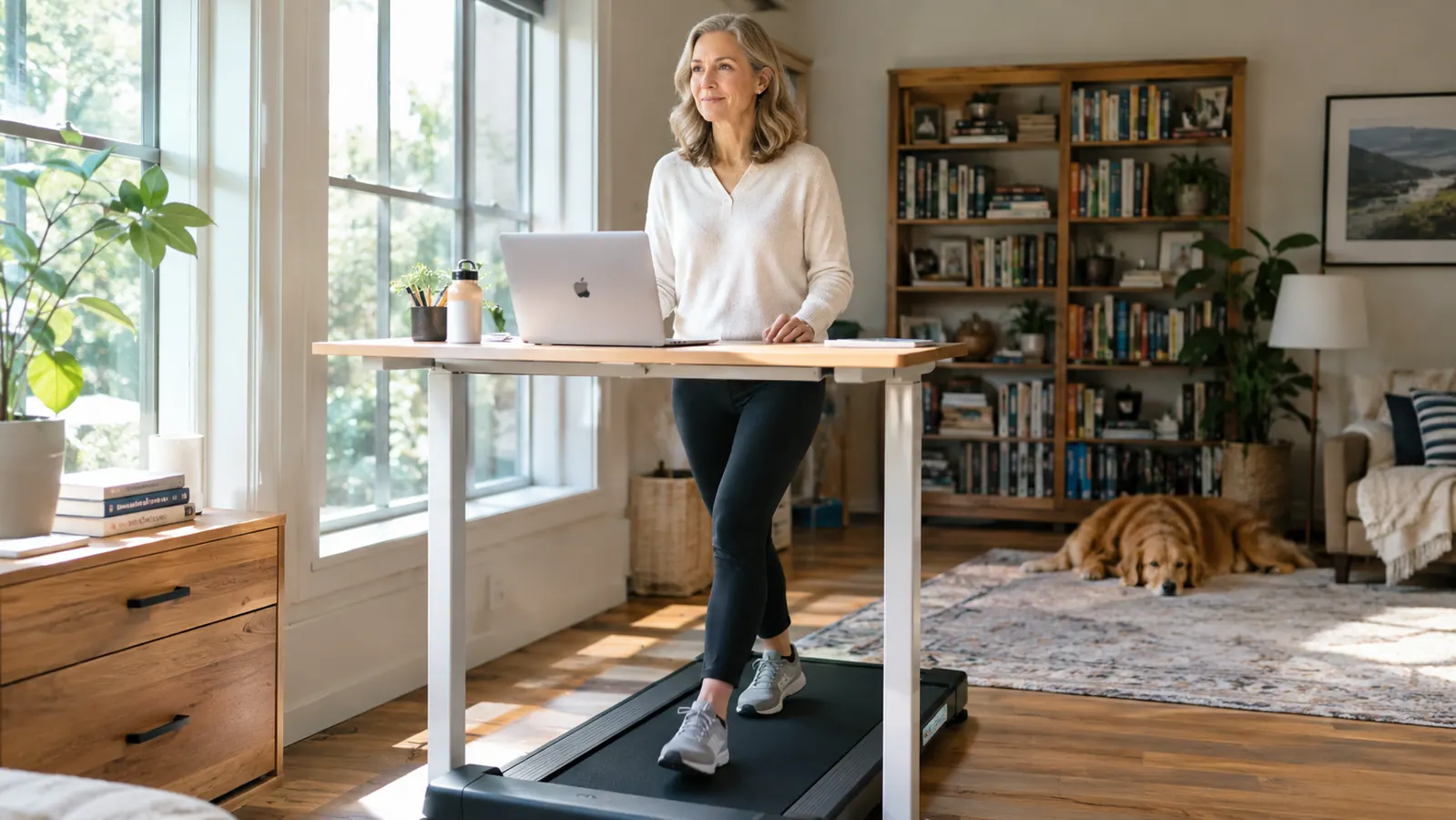
When the weather turns and the sidewalks get slick, my daily walks with Biscuit get shorter or disappear altogether. I'm Teresa, and I live in Toledo, Ohio, where winter can mean ice for weeks at a time. I didn't want to lose the walking habit I'd worked hard to build, so I started looking for a way to add steps indoors. That's how I ended up with the Vhorilix Walking Pad Treadmill, a compact under-desk walking pad that lets me get miles in without leaving the house. It's not a replacement for being outside, but it's an honest way to keep moving when the weather says otherwise.
This guide walks through how I set up the pad, how I built a routine that stuck, and what I'd do differently if I were starting over. It's not about training for a race or chasing a certain number on the scale. It's about making sure the steps happen even when the weather doesn't cooperate. If you've been thinking about a walking pad, I hope this saves you some of the trial and error.
Start Adding Steps Today Without Leaving the House
The Vhorilix Walking Pad fits under a desk or in a corner, and it's ready to go in minutes. I use it on days when Biscuit and I can't get outside. Check today's price on Amazon to see if it's a fit for your home.
Amazon Check Today's Price on Amazon →Why a Walking Pad Made Sense for Me
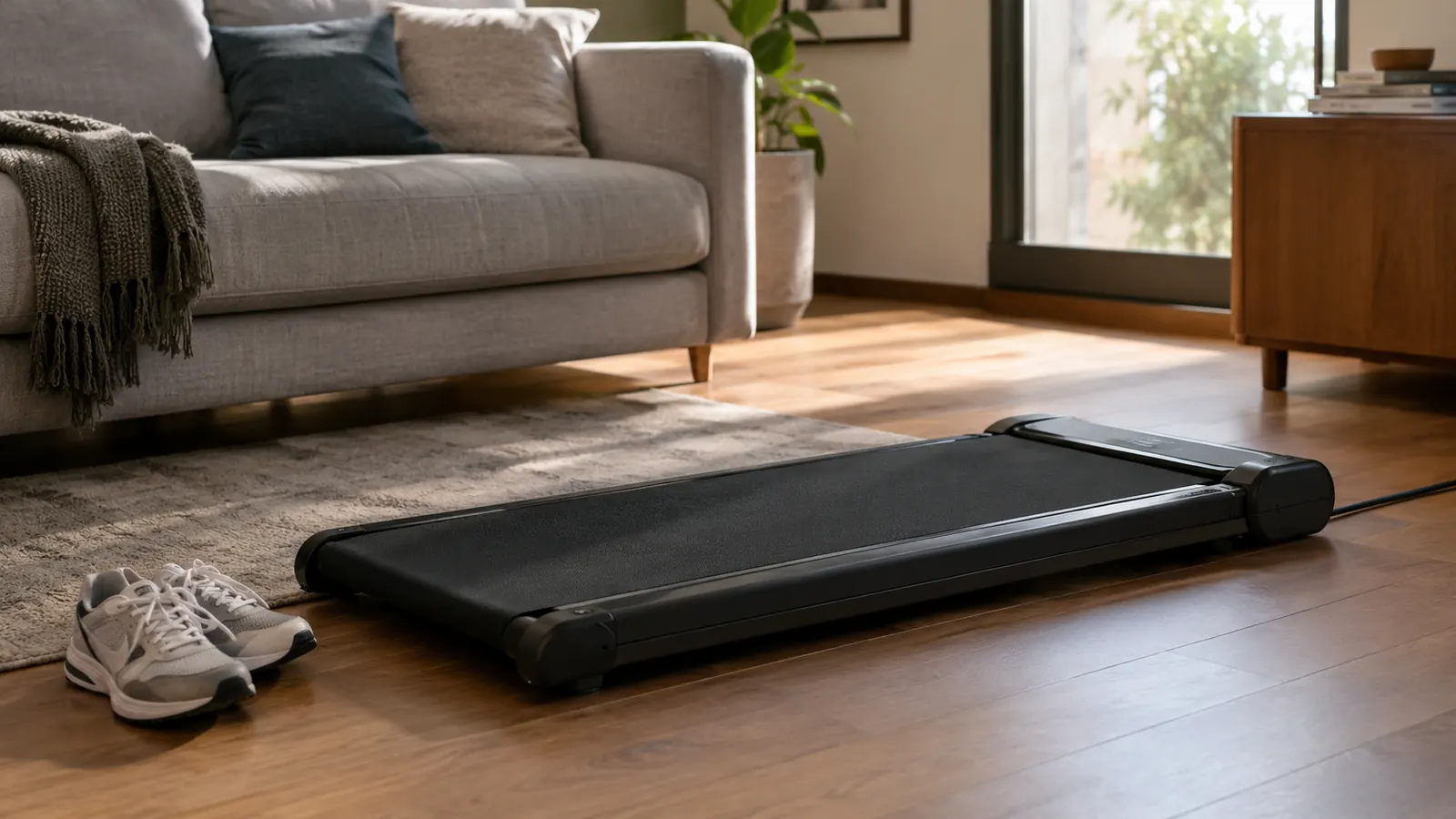
I looked at full-size treadmills first. They work well, but they take up a lot of room, and our house doesn't have a spare room for exercise equipment. The Vhorilix model is 42.91 inches deep, 19.69 inches wide, and 4.33 inches tall, so it slides under my desk when I'm not using it. It weighs 36.4 pounds, and it has built-in transport wheels, so I can move it from the office to the living room without asking Rick for help. That portability turned out to be the feature I use the most.
The motor is rated at 2.5 horsepower, which is enough for walking speeds up to 4 miles per hour. The LED display shows distance and speed, so I can see what I did without pulling out my phone. It's corded electric, which means I do need to be near an outlet, but that hasn't been a problem in our house. I keep the cord tucked along the baseboard, and it's out of the way.
I also liked that the folded size is 41.3 by 19.3 by 4.1 inches. That means I can store it upright in a closet or slide it under the bed if I need the floor space. For a small home, that flexibility matters. The pad is made with PVC, and it's held up fine on our hardwood floor with a mat underneath.
What to Know Before You Buy
Before you order, think about where the pad will live when you're not using it. The Vhorilix folds down to 41.3 by 19.3 by 4.1 inches, which is small enough to slide under a bed or stand in a closet. But it still needs a home, and if that home is a cramped corner, you're less likely to use it.
Also consider the cord. This is a corded electric model, so you need an outlet within reach. I use a short extension cord rated for the load, and I keep it tidy with a cord clip. If you only have outlets on the other side of the room, you'll want to plan for that before the pad arrives.
Finally, think about your own comfort. The pad is 19.69 inches wide, which is narrower than a full-size treadmill. That's fine for walking, but you need to pay attention when you step on and off. I always hold onto the desk for the first few seconds until I find my rhythm.
Step 1: Find a Spot With Enough Room
Before I ordered anything, I measured the spot where I planned to walk. The pad needs a footprint about 42.91 inches long and 19.69 inches wide, plus a little extra on each side so you can step on and off safely. I cleared a space in our spare bedroom, which doubles as my office. I moved a small bookshelf to the other wall, and that gave me plenty of room.
I also made sure there was an outlet nearby, since the pad is corded electric. The cord reaches easily, and I tucked it along the baseboard so nobody trips on it. If you're planning to use the pad under a desk, check that your desk is high enough to walk under comfortably. I learned that the hard way with our old desk, which was too low.
Finally, I put down a thin mat under the pad. It's not required, but it protects the floor and gives me a little cushion. The mat also keeps the pad from sliding on the hardwood. If you have carpet, you might not need the mat at all.
Step 2: Set It Up and Get Comfortable
The walking pad comes with a user manual, and setup took me about ten minutes. I took it out of the box, set it on the floor, and plugged it in. The LED display lit up right away, and I used the remote to test the speed. I didn't have to download an app or pair anything, which is exactly what I wanted.
I started at 0.6 miles per hour, which is the slowest setting. That felt like a gentle stroll, and it gave me time to get my balance. Then I worked my way up to 2 miles per hour, which is my usual walking speed on the pad. The speed range is wide enough that I can go from a slow warm-up to a brisk walk without any trouble.
The remote is simple. I use it to nudge the speed up or down while I'm walking, so I don't have to bend over to reach the pad. It's one of the reasons I picked this model. I keep the remote on the desk next to my coffee cup, so it's always within reach.
Step 3: Start With Short Sessions While You Adjust
My first session was ten minutes, and that was enough. I set a timer on my phone and walked while I watched the evening news. By the end of the week, I was up to twenty minutes without thinking about it. The key was not to overdo it on day one, because I wanted this to become a habit, not a one-time thing.
I kept the speed around 1.5 to 2 miles per hour at first. The pad is rated for up to 264 pounds, which gave me confidence that it would hold up. I'm not a runner, and I don't need a machine that goes faster than I'll ever walk. Even at a modest speed, I could feel my legs working and my heart rate come up a little.
The key is to listen to your body. If your ankles or knees feel off, slow down or stop. I'm not a doctor, and I'm not giving medical advice. If you have any health concerns, check with your doctor before you start a new routine. That's the same advice I'd give anyone, no matter what machine they're using.
Step 4: Build a Routine That Fits Your Day
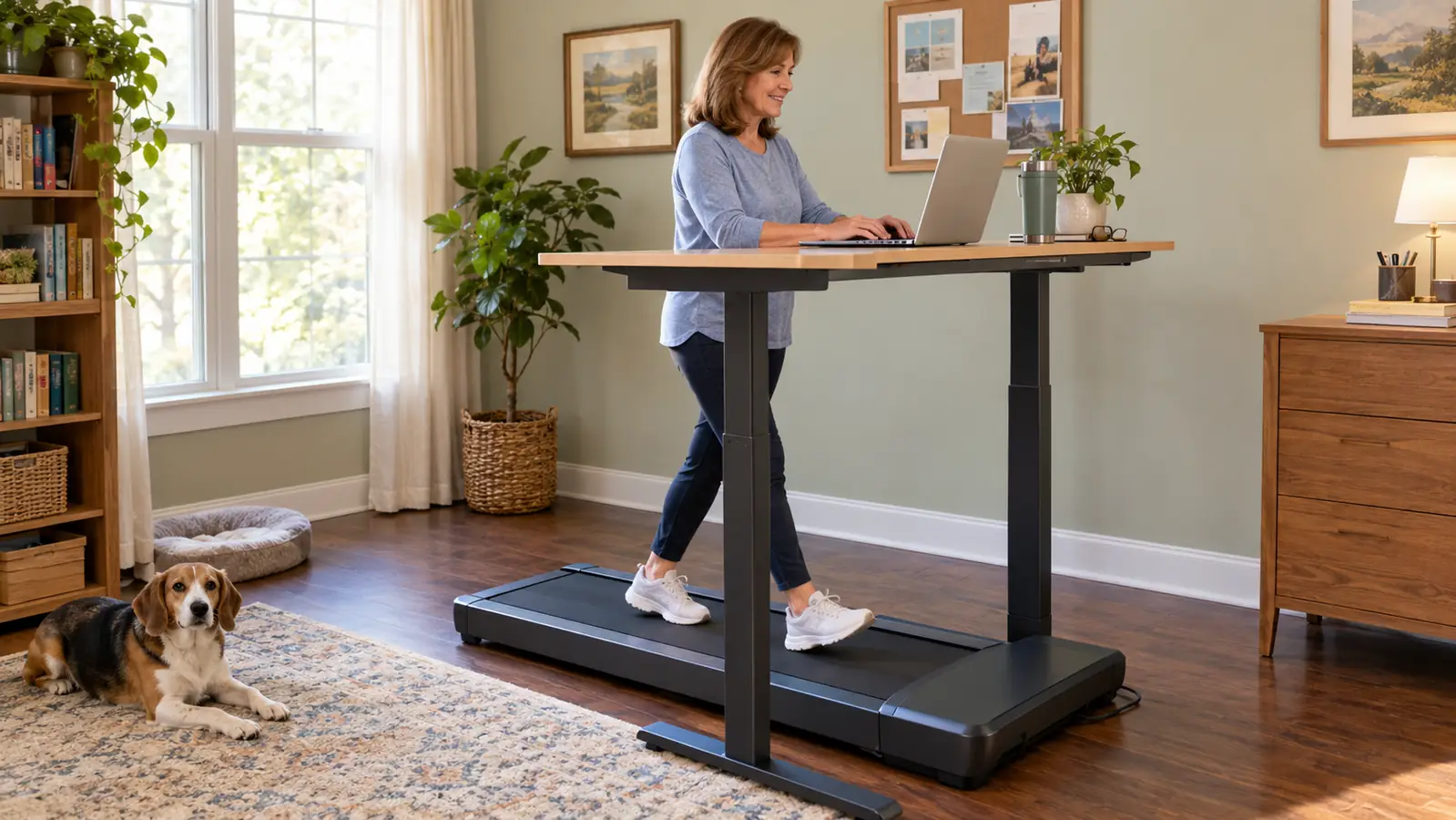
On bad-weather days, I aim for two indoor sessions: one in the morning while I answer emails, and one after dinner while I watch TV. I keep the Vhorilix pad under my desk, so it's already out and ready. That makes it much easier to actually use it. If I had to haul it out of a closet every time, I probably wouldn't do it as often.
I also keep a simple log on my phone. I write down the distance from the LED display and how the session felt. On Saturday mornings, I weigh in, but I don't let the scale run the show. I pay more attention to how my clothes fit and how much energy I have. The scale can bounce around from day to day, and that used to discourage me.
Biscuit usually curls up on the rug nearby while I walk. He still gets his real walks when the weather allows, but on icy days, he's happy to supervise from the floor. It works for both of us. I get my steps in, and he gets to stay warm and dry.
Step 5: Track Progress and Adjust as You Go
The LED display shows distance and speed, which is all I need. I write down the numbers in my phone log, and I can see the slow progress over time. Some days I walk a mile; some days I walk two. It adds up more than you'd think, especially on weeks when the weather keeps me inside.
If a session feels too easy, I use the remote to bump the speed up a little. If I'm tired or sore, I back it down. The pad goes from 0.6 to 4 miles per hour, so there's a wide range to play with. I don't chase a certain speed every day. I let how I feel decide.
I also change where I walk. Some days I use it under the desk, and other days I move it to the living room and walk while I talk on the phone. The transport wheels make it easy to move, and the pad is light enough at 36.4 pounds that I can handle it myself. Rick helps if I'm moving it up a step, but most days I don't need him.
How I Use It on a Normal Day
Here's what a typical bad-weather day looks like for me. I get up, make coffee, and take Biscuit for a quick walk if the sidewalks are clear enough. If they're not, I skip the outdoor walk and head straight to the spare room. I set the Vhorilix pad to 1.5 miles per hour and walk for twenty minutes while I check my email and plan my day.
After lunch, I might do another session while I listen to a podcast. I keep the pad under the desk, so I can stand up, turn it on, and start walking without any setup. The LED display reminds me how far I've gone, and I usually stop somewhere between one and two miles. Then I stretch my calves and get back to work.
In the evening, Rick and I watch a show together, and I walk during the first episode. It's not a huge amount of time, but it adds up. On days when I do two or three sessions, I can easily get a few miles in without ever putting on a coat.
What I'd Do Differently
If I were starting over, I'd spend more time on my shoes. I walked in old sneakers the first week, and my feet let me know about it. A good pair of walking shoes makes a big difference on a pad, because you're taking thousands of steps in one session. I switched to a pair with more cushioning, and that solved the problem.
I'd also start with a set time of day instead of waiting until I felt like it. For me, the morning session works best. If I put it off until later, something always comes up. Now I treat it like a dental appointment, which makes sense coming from a retired dental office manager. I put it on the calendar and I show up.
Common Mistakes I See People Make
The biggest mistake is starting too fast. People think a walking pad should feel like a workout, so they crank the speed up and then quit after a week because they're sore. I started slow, and I'm still using mine months later. Slow and steady wins this game.
Another mistake is not giving yourself enough room. If the pad is jammed against a wall, you'll feel cramped and you won't want to use it. Give yourself a little space on both sides and behind you. It makes the whole experience more comfortable.
The last one is forgetting to use it when the weather is fine. The pad is great for bad days, but it's also nice on days when you just don't feel like going out. I use it more in the summer than I expected, especially in the heat of the afternoon.
What Else Helps
The walking pad is one tool, but it's not the whole plan. I still take Biscuit outside when the sidewalks are safe, because the fresh air is good for both of us. I also focus on eating more protein and fiber, and I do short home strength sessions a couple of times a week. The strength work is something I enjoy alongside the walking.
I prep my lunches on Sunday, so I'm not scrambling during the week. And I try to be consistent rather than perfect. If I miss a day, I just start again the next day. The walking pad helps me stay consistent, but it doesn't do the work for me.
I also make sure to drink water during my sessions. It's easy to forget when you're inside, but walking at 2 miles per hour for thirty minutes can still leave you thirsty. I keep a water bottle on the desk, and I take small sips while I walk.
I can walk at 2 miles per hour while I type, and the motor is quiet enough that I can hear the TV.
The Bottom Line
The Vhorilix walking pad isn't a fancy piece of equipment, and that's exactly why it works for me. It's simple, it's quiet, and it fits in a small home. I don't need a screen with workout classes or a subscription. I need a flat surface that lets me walk while I do other things.
If you're on the fence, I'd say start with a walking pad before you invest in a full-size treadmill. You can always upgrade later if you find yourself using it every day. For me, the Vhorilix has been a steady part of my routine for months, and it's helped me stay active through the worst of Ohio's weather.
Make Bad-Weather Days Count
If you've been thinking about a walking pad, the Vhorilix is a solid place to start. It's portable, it's quiet, and it fits in a small home. Check today's price on Amazon and see if it's right for you.
Amazon Check Today's Price on Amazon →