

If you're like me, you don't sit down to three tidy meals a day. You have coffee, then a busy morning, then you look up and it's 2 p.m. and you've eaten mostly toast and leftovers. Protein is the thing that quietly slips away first. I noticed it when I started paying attention to what was actually on my plate: breakfast was carbs, lunch was a salad with no chicken, and dinner was the only meal with real protein in it. My doctor had already told me my numbers were creeping up, so I knew I needed to change something. But adding more protein felt like one more chore on a list I was already failing. The fix I finally landed on wasn't a fancy plan. It was a tub of Optimum Nutrition Gold Standard Whey on my counter and a few simple habits around it.
I tried the obvious fixes first. More eggs at breakfast, which worked until I got tired of eggs. Greek yogurt, which I liked but could never seem to keep in the house. And then a friend who had lost weight the slow, boring way told me she kept a tub of whey powder in her kitchen and used it like a pantry staple, not a gym accessory. That changed how I thought about it. Whey wasn't a supplement for athletes. It was a kitchen staple, and that made it something I could actually use.
Start With a Tub That Makes the Habit Easy
Optimum Nutrition Gold Standard Whey is the powder I keep reaching for: 24 grams of protein per scoop, 29 servings in a 2-pound tub, and it mixes into cold water without turning into a science experiment. Check today's price on Amazon and see if it fits your kitchen.
Amazon Check Today's Price on Amazon →Why Whey, and Why This Tub
Whey is the protein that comes from milk, and it is one of the most common protein powders on the shelf. A scoop of Optimum Nutrition Gold Standard Whey gives you 24 grams of protein, and it mixes into cold water, milk, oatmeal, or a blender with frozen fruit without a lot of fuss. That matters to me because I'm not a person who enjoys complicated food prep. I want something that works on a Tuesday morning when I'm already running late.
I also like that this tub is straightforward. It's a 2-pound tub with 29 servings, so it lasts a while. It's gluten free and fits a keto diet if that's how you eat. It's been tested for banned substances, which matters if you're careful about what goes in your body. And the protein comes from whey protein isolate and concentrate, which is the standard I looked for when I was comparing labels.
Step 1: Start With a Real Breakfast, Not a Shake by Itself
The mistake I made early on was treating a protein shake as a meal replacement. It's not. A shake with 24 grams of protein and nothing else did not feel like a real breakfast to me, so I started adding fruit and oats to make it a proper meal. What works better is using the shake to fix a meal that's already there. My standard move is a bowl of oatmeal with a scoop stirred in, or a smoothie with a banana, a handful of frozen fruit, and a scoop of Optimum Nutrition Gold Standard Whey. The shake adds the protein; the oatmeal and fruit add the staying power.
If you're not a breakfast person, start smaller. Half a scoop stirred into plain yogurt works fine. The point is to add protein to a meal you already eat, not to build your whole morning around a supplement. That's what made it stick for me, and it's the difference between a habit and a chore.
Step 2: Keep a Shake for the 3 p.m. Slump Instead of a Snack
My worst time of day used to be mid-afternoon. I'd be hungry, the evening snacks would be calling, and I'd wander into the kitchen looking for something salty. Now I keep a shaker bottle in the fridge door, and instead of wandering the kitchen I make a planned snack: a shake with cold water and a scoop of the Double Rich Chocolate powder. It takes about a minute. It's not a meal, but it's a planned snack, so I'm not eating my way through the pantry.
The reason this works is that it's a choice I make ahead of time. I'm not deciding between a shake and a bag of chips in the moment, because the shake is already there. I just have to pour and shake. If you're someone who snacks in the evening like my husband Rick, this is the step that might help most: deciding on a 3 p.m. snack ahead of time, so the evening is not a free-for-all.
Step 3: Use It to Round Out a Light Lunch
Lunch was the meal where my protein fell apart. A salad with lettuce, tomato, and dressing sounds healthy, but it has almost no protein, and it never felt like a complete meal to me. The fix wasn't complicated. Now I make a shake with cold water and drink it alongside my lunch, or I stir a scoop into plain Greek yogurt and eat it like a savory side. Either way, lunch goes from a side salad to a meal with some real protein in it.
The other thing that helped was keeping the powder visible. The tub stays on the counter, not in the back of a cabinet. Out of sight really does mean out of mind for me, and I'm guessing I'm not alone. If you want to use protein powder more often, put it where you'll see it when you're making lunch.
Step 4: Make It Part of Your Sunday Prep, Not Your Morning Rush
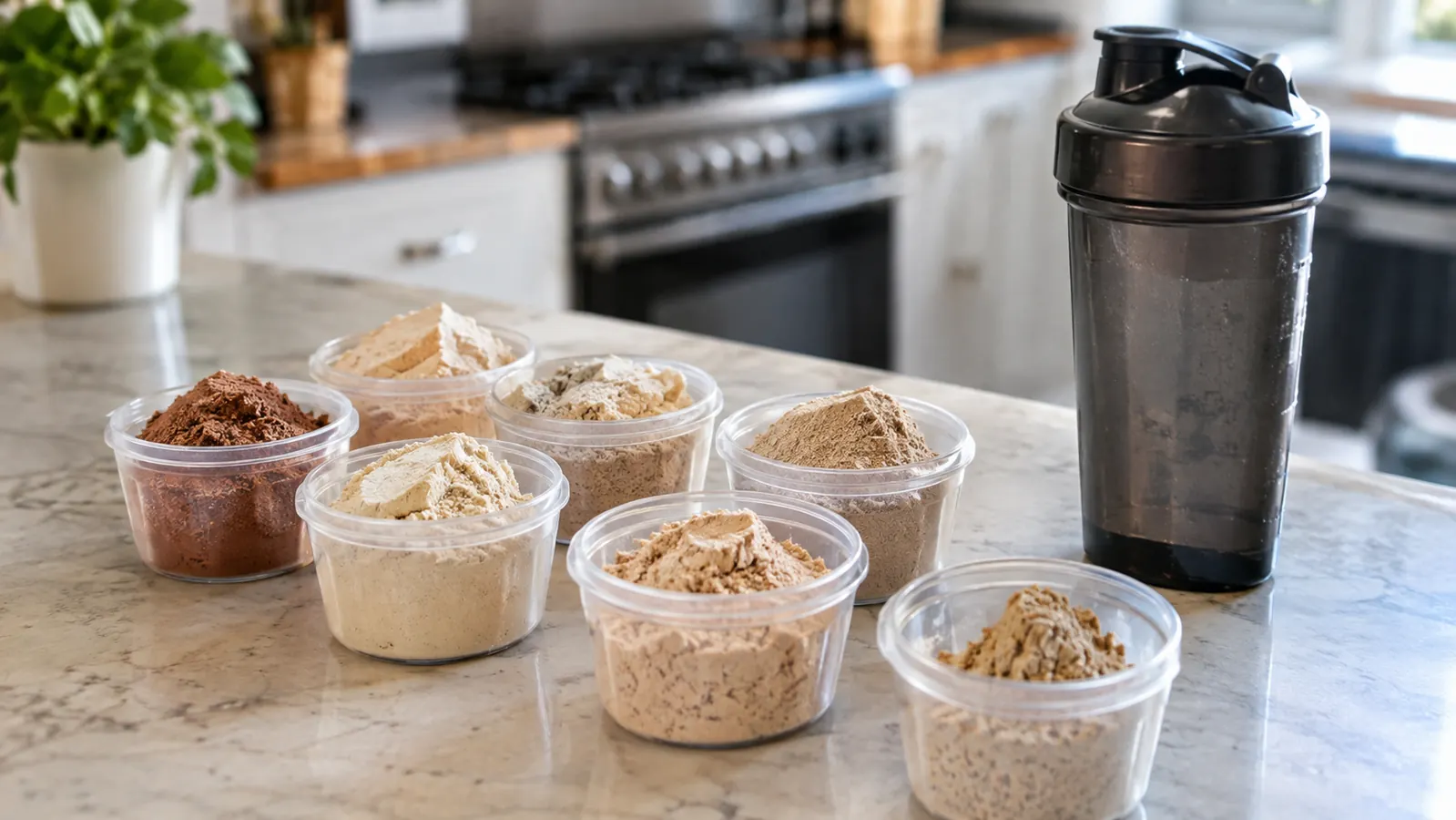
I prep lunches on Sunday, and that's when the protein work gets done. I measure out single scoops into small containers, so on a busy morning I don't have to fumble with the big tub. I also mix up a couple of shakes and keep them in the fridge for the next two days. They keep fine, and having them ready means I don't skip protein just because I'm late.
This is the step that turned whey from a product I owned into a habit I actually kept. The tub stays on the counter, the scoops are pre-measured, and the shaker bottle goes in the dishwasher every night. If you do better with less friction, this is where you want to spend your effort. The powder is only useful if it's easy to reach when you need it.
Step 5: Use It Around Your Workouts, but Don't Overthink the Timing
I do short home strength sessions a few times a week, nothing impressive, just enough to hold onto muscle while I lose weight. A shake afterward is a convenient way to get protein in, and the label on Optimum Nutrition Gold Standard Whey lists 5.5 grams of naturally occurring BCAAs and 11 grams of essential amino acids per scoop. But here's what I learned: the timing matters less than the total. What matters is that you get enough protein across the day, not that you drink a shake exactly 20 minutes after exercise.
So I use a shake after strength sessions because it's easy, not because I think there's a magic window. If you work out in the morning, a shake after is easy. If you walk at lunch like I do with my dog Biscuit, a shake when you get back is easy. The habit is the point. The exact minute is not.

What a Normal Day Looks Like for Me
Here's what a Tuesday actually looks like at my house. Breakfast is oatmeal with a scoop of Optimum Nutrition Gold Standard Whey stirred in, plus coffee. Lunch is leftover soup with a shake on the side, or a bowl of plain yogurt with a scoop mixed through it. Mid-afternoon, if I need something, it's a cold shake instead of the snack cabinet. Dinner is a normal dinner with meat or beans, and Rick gets the evening snacks he likes while I have a cup of tea. The powder isn't the star of any meal. It's the thing that keeps protein from falling through the cracks.
That's the whole point of this system. I'm not on a special diet and I'm not making complicated recipes. I'm just making sure protein shows up at the meals where it used to disappear. I weigh in on Saturday mornings, and the direction has been good, slowly. My doctor is happy with the direction, and so am I.
What Else Helped Me Make Protein Stick
The whey powder is a tool, not the whole plan. What actually moved my numbers over time was the boring stuff: walking twice a day with Biscuit in every kind of Ohio weather, eating more fiber from vegetables and beans, and doing short strength sessions at home. I weigh in once a week on Saturday morning and keep a simple food log on my phone. None of it is dramatic. All of it adds up.
If you have a health condition or you're not sure whether a supplement fits your situation, check with your doctor before you add anything. That's not a disclaimer, it's just what I'd tell a neighbor. And if you're deciding between whey and a plant-based powder, that's a real choice worth making on purpose. Whey comes from milk, so it's not for everyone. For me, it's been the easiest way to get protein without turning every meal into a project.
Two more things made a real difference, and neither one is a product. I started going to bed at a reasonable hour because I noticed I made worse food choices when I was tired. And I stopped trying to make perfect choices and started making good ones. A shake with lunch on a chaotic day beats a perfect homemade meal that never actually happens.
24 grams of protein per scoop, and it mixes into cold water without a fuss. That's what makes it work on a Tuesday morning when you're already running late.
The Bottom Line
If you're thinking about adding whey powder to your day, my advice is to keep it simple. Buy a tub of Optimum Nutrition Gold Standard Whey, put it where you can see it, and use it to add protein to meals you already eat. Start with half a scoop if you need to. Use it at breakfast, at the afternoon slump, or after a walk. The exact routine matters less than the fact that you have one.
And remember, the powder is a helper, not a shortcut. The walking, the fiber, the strength sessions, the food log, those are the things that moved my health over time. The whey just made it easier to get enough protein while I did them. If you have questions about whether a supplement is right for you, check with your doctor. Then make the boring, steady choices, and let the protein powder do the one job it's good at.
Make Protein the Easy Part of Your Day
One scoop of Optimum Nutrition Gold Standard Whey is 24 grams of protein, and the tub is right there on my counter when I need it. Check today's price on Amazon and decide if it belongs in your kitchen.
Amazon Check Today's Price on Amazon →